Hawaii Housing 101: Renting vs. Buying in Hawaii as a New Resident
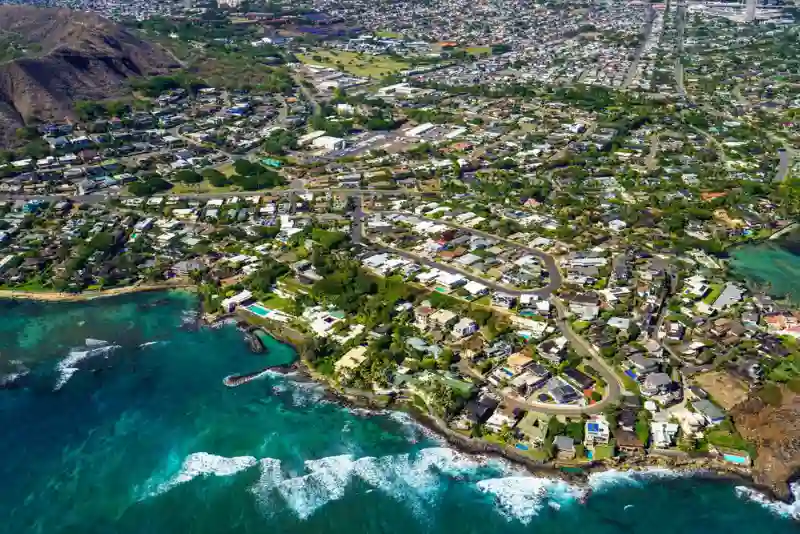
The cost of a median single-family home on Oahu is $1.2 million and the average rent is around $2,664 a month. Deciding whether to rent vs buying in Hawaii comes down to how long your plan to stay.
Hawaii is definitely an extreme case when it comes to the national rent versus buy debate. Land scarcity keep the home prices high while the rent prices continue to rise too. There really isn’t a more cost-effective option in Hawaii. It’s more about different tradeoffs.
We’ll go over real price and rent data, the price-to-rent ratio that helps decide, loan programs that may help lower the buying barrier, and how to really think about the decision moving to Hawaii as a new resident. And as a new resident, it will help greatly if you already have your job secured before your move. Finding a job in Hawaii isn’t always easy, so the more prepared you are, the easier your decision will be between buying or renting.
Quick Answer
The average rent in Hawaii is $2,664 a month statewide (somewhat higher on Oahu) and a median Oahu home costs $1.2 million (about $5,500-$6000 a month). It may make more sense to rent your first year or two as a new resident. Buying may be the more ideal option if you’re certain that you’ll stay 5+ years. Buyers can take advantage of Hawaii’s strong long-term appreciation.
Moving to or from Hawaii?
Get the complete, no-fluff guide with real numbers, timelines, and checklists covering both directions of the move. Written from firsthand experience, not recycled internet advice. Grab it today for just $9.
Get The Hawaii Move GuideKey Takeaways
- Oahu’s median single-family home price is $1,200,000; the median condo is $510,000
- Statewide average rent sits around $3,000/month; Oahu’s island-wide average is $2,664/month, with a 3-bedroom house often running $3,800–$4,200/month
- 30-year mortgage rates in Hawaii are hovering near 6.0–6.9% as of mid-2026
- Oahu home values have appreciated 50–76% over the past 10 years
- Low- or zero-down loan programs (FHA, VA, USDA) can help lower the barrier to buying
What Renting Actually Costs
The statewide average rent in Hawaii is around $3,000 a month. Oahu’s average rent is $2,664 a month for apartment living. Renting a 3-bedroom home on Oahu is averaging around $3,800-$4,200 a month. Keep in mind that with the tight rental market, the vacancy rate on Oahu is around 3.4% so renters have limited negotiating power.
What you may not be happy to read is that rent prices are continuing to climb at 1-2% through the rest of 2026. Therefore, renting to save money isn’t a good strategy to rely on.

What Buying Actually Costs
There are two options that buyers consider in Hawaii. That is either a single-family home or a condo. To give you an idea of pricing, Oahu’s median single-family home sits at around $1,200,000. A median condo on Oahu averages around $510,000.
Buying a single-family home priced at $1,050,000 with 20% down ($210,000) at a 6-6.5% rate has an estimated monthly payment of $5,500-$6,000 which is including principal, interest, taxes, and insurance.
If you’re leaning more towards buying a condo, you may like the lower purchase prices, but the monthly association fees can add several hundred dollars (sometimes $1,000 plus) a month. The apartment complex we lived in on Oahu had a low (in comparison to average fees) HOA fee for owners. However, I’ve seen condo HOA fees as high as $1,200 a month.
Most of the reasoning for the high HOA fees is due to many of the buildings in Hawaii being older. Maintenance issues are common from plumbing to electricity.
One thing to note is that Hawaii has a low property tax rate which is around 0.3%. It is the lowest in the country and actually works in buyers’ favor compared to mainland states.
What Is the Price-to-Rent Ratio?
The price-to-rent ratio is a simple formula used to gauge wheter buying or renting makes more financial sense in the given market. The formula is: home price ÷ annual rent. A ratio under 15 generally means buying is ideal. A ratio over 21 leans more towards renting. A ratio in between can go either way.
Loan Programs That Lower the Barrier to Buying
Having options for home loans can help when you’re attempting to buy a home in Hawaii. Below are some home loan options that may help lower the barrier to buying when deciding which Hawaiian island to move to.
FHA Loans
This loan may offer a lower down payment. For example, 3.5% down on a $500K condo is $17,500 instead of $100,000. That is a huge difference! Mortgage insurance applies with FHA loans.
VA Loans
For VA loans there is $0 down and no PMI. It is one of the strongest loans for eligible buyers in Hawaii. With Hawaii’s higher prices, zero down is a benefit.
USDA Loans
These loans offer $0 down for rural areas. On Oahu, this can include parts of the North Shore, Waianae, and some Windward communities. It is worth finding out if the neighborhood you’re interested in qualifies.
These loan options are worth considering in Hawaii as they are often the most realistic route to home ownership.
Should You Rent or Buy as a New Resident?
It makes sense to rent the first year or two of moving to Hawaii. This gives you the opportunity to learn about the different neighborhoods. We got lucky when we moved to Oahu. We rented based on a Craigslist post. Fortunately, we ended up living in-town and were 10 minutes from just about everything: the beach, the mall, hospitals, etc.
The downside was our apartment. While it seemed ideal on Craigslist, it ended up being one of the worst places we lived in terms of noise. We only had jalousie blinds (no actual windows) so we heard everything from loud mopeds, cars, to ambulance sirens.
Buying a home can make more sense if you plan on living on the island for 5-7 years. Keep in mind that the cost of living is high. When buying, you’ll also have to set up your utility account in Hawaii. Utilities are expensive. Hawaii has the highest electricity rates in that nation costing between 41¢ and 52¢ per kilowatt-hour (kWh).
Knowing what we know now after living on Oahu for several years, I would still rent first. It’s important to get to know the neighborhoods. Some are quieter than others. It also depends on how much of a commute you want to have if you want to live close to work or town.
Renting vs Buying in Hawaii: Quick Comparison
| Renting | Buying | |
|---|---|---|
| Typical monthly cost (Oahu) | $2,664–$4,200/month | $5,500–$6,000/month (median home, 20% down) |
| Upfront cost | Security deposit, first month’s rent | Down payment (as low as $0–3.5% with VA/FHA/USDA), closing costs |
| Flexibility | High. Easier to relocate or change neighborhoods | Low — significant cost to sell and move again |
| Long-term value | None. Payments don’t build equity | Potential appreciation (historically 4–5.8%/year on Oahu) |
| Best for | First 1–2 years, or uncertain length of stay | Staying 5+ years, financially prepared for the commitment |
Renting vs Buying in Hawaii Frequently Asked Questions
If your plan is to stay in Hawaii for several years (5+), buying may be the best option to lock in your housing cost since rents are rising. Renting works well for shorter or uncertain stays.
The cost of a median single-family home on Oahu is $1.2 million. A median condo is $510,000. Pries will vary significantly by island and neighborhood.
The average rent statewide is around $3,000 a month. Oahu’s island-wide average is $2,664 a month. Rent for a 3-bedroom house is around $3,800-$4,200 a month.
Yes, it’s possible with certain loans such as the VA loan or USDA loan (for designated rural areas). FHA loans require as little as 3.5% down.
It is unlikely due to persistent demand and limited land supply.
A ratio under 15 generally favors buying. If the ratio is over 21, it favors renting.
Final Thoughts
When we moved to Oahu, it was literally on a whim. We had always wanted to live there together and our hope was to live there well into retirement age. However, after about 3 years, we seriously began to think about leaving and that’s what we ended up doing. Our apartment and the area we lived in had a lot to do with it. Here are my thoughts on renting vs buying in Hawaii.
Research as Much About the Areas as You Can
We moved to Oahu and there are many different areas to live in. We lived in-town and while it was convenient for getting around, it was also noisy and hectic (in the area were in). I’ve mentioned the loud moped issue Oahu has as well as loud cars and motorcycles. There were a lot of ambulances that would go up and down our street as well.
Avoid Any Rental with Jalousie Windows (If you like quiet)
There are many apartments/condos that have jalousie windows which are parallel slats made of glass, acrylic, or wood. The apartment we lived in had wood jalousie windows with screens and no actual glass windows. We heard all of the street noise and our neighbors talking. All of the smells would come into our apartment (people cooking, people smoking cigarettes). There was never any peace and quiet.
Older Apartment Buildings are Walk-Ups
We lived in a 3-story walk-up on the third floor. That meant we had to haul groceries up the stairs as well as hauling our laundry up and down to go to the laundromat. Yes, our complex had washers and dryers but they were extremely old and our clothes did not smell fresh after using them.
Many Apartment Complexes Don’t Have Parking Spaces Available
When we moved into our apartment, we had to be placed on a waiting list for a parking space. Whenever a tenant moved out, a parking space would become available to whoever is next on the list. We spent the first year of living there having to park on the street. Parking on the street was hit or miss. Sometimes we had to park on a part of the street where we had to move our car before 6 am. Needless to say, we forgot one morning and our car was towed. It cost us around $200 to get our car back.
What I’ve shared about our experience isn’t to deter anyone from moving to Hawaii. However, there are some realities to consider before you move, especially if you plan on renting an apartment.
Moving to or from Hawaii?
Get the complete, no-fluff guide with real numbers, timelines, and checklists covering both directions of the move. Written from firsthand experience, not recycled internet advice. Grab it today for just $9.
Get The Hawaii Move Guide